ESA vs. PSD: Which Letter Do You Need for Housing & Travel? [2026 Guide]
ESA vs. Psychiatric Service Dog (PSD): Which Clinical Letter Do You Actually Need?
By The Clinical Support Animals Team | Medically Reviewed by Licensed Mental Health Professionals
If you are struggling with a mental health condition, the companionship of an animal isn't just a luxury—it is a medical necessity. However, the laws regarding assistance animals have changed significantly in recent years, leading to confusion among handlers.
Do you need an Emotional Support Animal (ESA) or a Psychiatric Service Dog (PSD)?
Choosing the wrong designation can lead to denied housing applications or being turned away at the airport gate. At Clinical Support Animals, we specialize in connecting you with licensed professionals to secure the exact legal documentation you need.
Here is the definitive guide to understanding your rights in 2026.
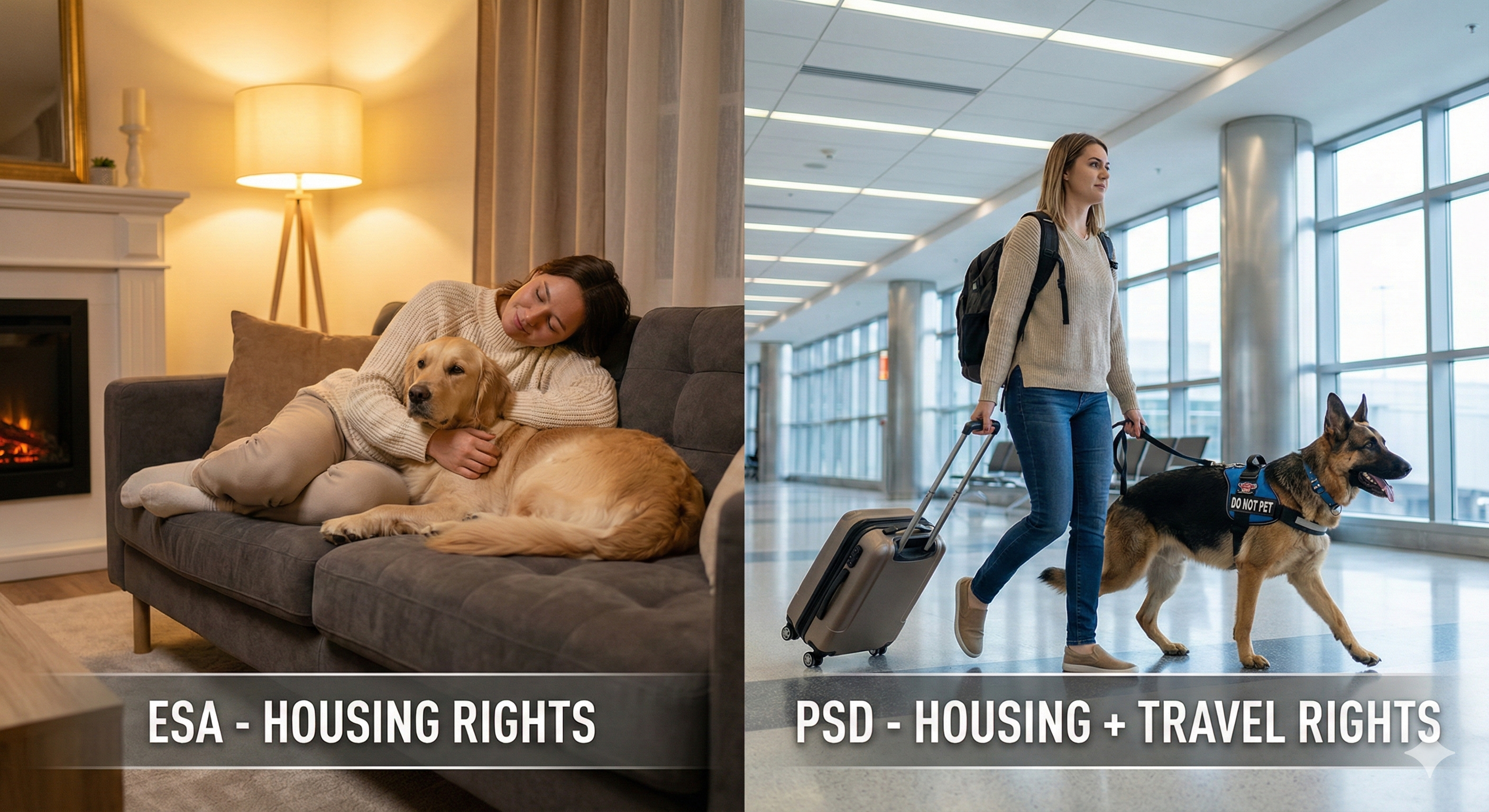
Understanding the difference between ESA and PSD rights.
1. The Definitions: What is the Difference?
While both animals provide essential support for disabilities, the legal distinction lies in their training and their purpose.
Emotional Support Animal (ESA)
An ESA provides comfort and relief from symptoms of a mental/emotional disability (like anxiety or depression) simply by being present.
- Training: No specific training is required.
- Species: Can be a dog, cat, rabbit, bird, etc.
- Primary Law: Fair Housing Act (FHA).
Psychiatric Service Dog (PSD)
A PSD is a specific type of Service Animal trained to perform specific tasks that assist with a disability.
- Training: Must be individually trained to perform work (e.g., Deep Pressure Therapy during a panic attack, waking a handler from night terrors, blocking strangers to reduce anxiety).
- Species: Dogs only.
- Primary Laws: Americans with Disabilities Act (ADA), Fair Housing Act (FHA), and Air Carrier Access Act (ACAA).
2. Housing Rights: The Fair Housing Act (FHA)
Both ESAs and PSDs are protected under federal housing laws.
If you have a legitimate letter from a licensed healthcare provider (like the ones we provide), landlords are legally required to provide "Reasonable Accommodation" for your assistance animal.
Your Housing Rights Include:
- No Pet Rent: You are exempt from monthly pet fees.
- No Pet Deposits: You cannot be charged an upfront pet deposit.
- Breed & Weight Exemptions: Your animal is not a "pet," so breed and size restrictions generally do not apply.
Which letter do you need?
If you only need the animal to live with you in a "no-pet" building or to waive fees, an ESA Housing Letter is sufficient. However, a PSD Housing Letter offers the same protections if your dog is task-trained.
3. Travel Rights: The Air Carrier Access Act (ACAA)
This is where the major difference lies.
In 2021, the Department of Transportation updated regulations regarding air travel. Airlines are no longer required to accept ESAs. Most major airlines now treat ESAs as standard pets, meaning they must fit in a carrier under the seat or fly in cargo, and you must pay pet fees.
Psychiatric Service Dogs (PSDs) Still Fly Free.
Under the ACAA, trained Service Dogs are allowed to fly in the cabin with their handler, regardless of size (as long as they fit in the foot space), and are exempt from pet fees.
Which letter do you need?
If you plan to fly with your dog, you require a PSD Travel Letter. This document attests that you have a qualifying disability and that the animal is a necessary component of your treatment during travel.
4. The "Task" Requirement for PSDs
To qualify for a PSD letter, your dog must be trained to perform a task. Many owners do not realize their dog already performs these tasks naturally, but they must be shaped into reliable commands. Common tasks include:
- Tactile Stimulation: Licking or nudging to disrupt an anxiety attack.
- Pressure Therapy: Sitting on the handler’s lap or feet to lower heart rate.
- Barrier Creation: Standing between the handler and others in crowded spaces.
Note: Our PSD packages evaluate your need for a service animal, but you are responsible for ensuring your dog is trained and well-behaved in public.
Not sure if you qualify?
Our HIPAA-compliant assessment takes less than 5 minutes. Find out if you are eligible for an ESA or PSD letter today.
5. Why "Instant" Certificates Are a Scam
You may have seen websites selling "Official Registries" or "ID Cards" without a doctor's involvement. These hold no legal weight.
To be legally compliant, your documentation must come from a licensed mental health professional (LMHP) who has evaluated your condition.
At Clinical Support Animals, we do it the right way:
- Secure Assessment: You complete a HIPAA-compliant intake form regarding your mental health.
- Licensed Review: A real therapist in your state reviews your case.
- Legal Documentation: If approved, you receive a signed letter on professional letterhead with the clinician’s license number and contact info.
Summary: Which Assessment Should You Take?
- Choose ESA if: You need your animal for comfort at home and want to waive pet rent/deposits.
- Choose PSD if: Your dog is trained to perform tasks for your disability and you need to fly with them in the cabin.
Ready to secure your rights?
Don't risk eviction or travel denial. Take our risk-free assessment today and get matched with a licensed professional.
Frequently Asked Questions
Do I need to renew my ESA letter?
Yes. Landlords and airlines typically require documentation dated within the last 12 months. We offer an easy Renewal Form for existing clients to keep your documents active.
Can a landlord deny an ESA letter?
A landlord can only deny a request if it causes an "undue financial burden" or if the specific animal poses a direct threat to safety. They cannot deny it simply because they have a "no pets" policy.
Does a PSD need a vest?
No. The ADA does not require service dogs to wear a vest, ID tag, or harness. However, wearing one can help signal to airline staff and landlords that your dog is working, reducing confrontations.