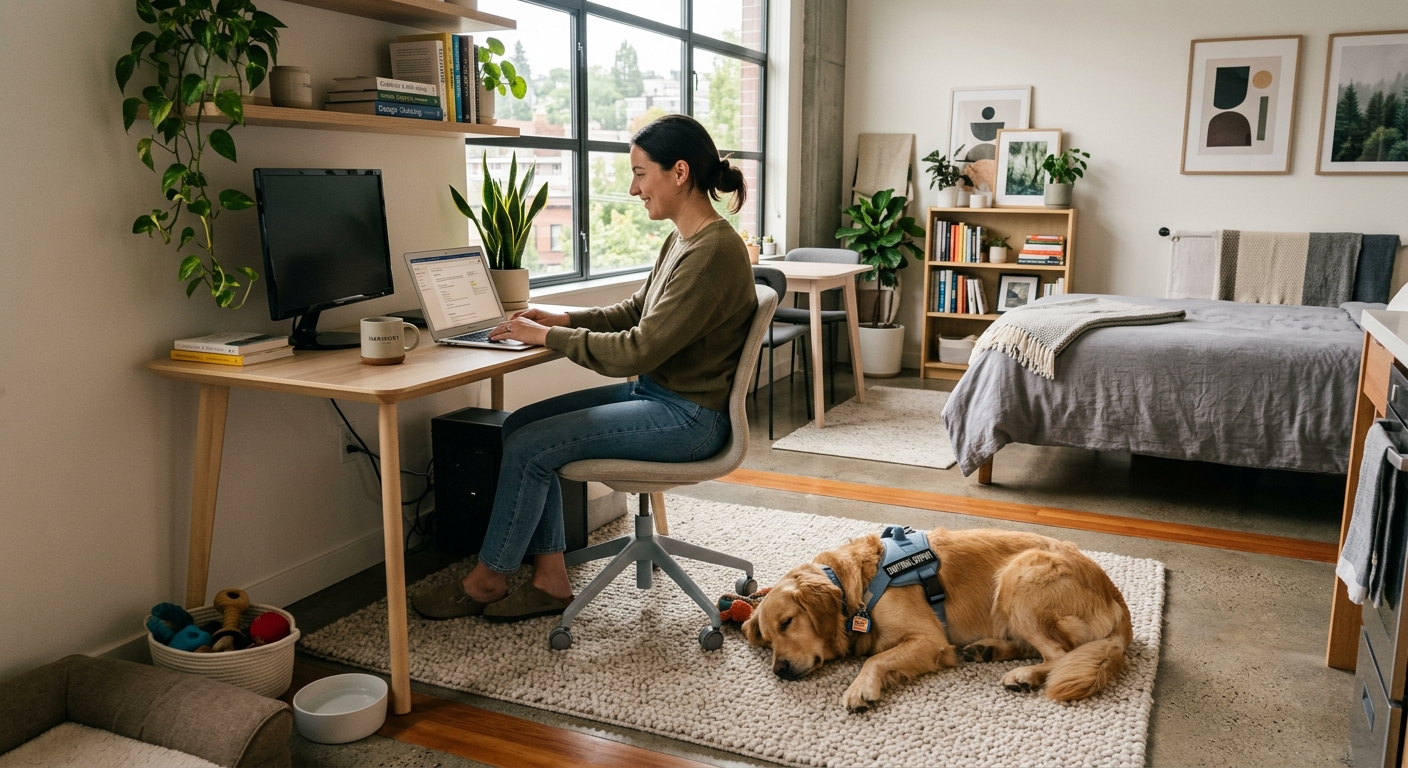
Clinical Support Animals: Keeping Your Support Companion in Live-Work Studio Spaces
The allure of a live-work studio space is undeniable. Combining your professional ambition with your personal sanctuary under one roof offers unparalleled convenience, cost-efficiency, and a unique lifestyle. For many, however, this dream setup includes an essential companion: an Emotional Support Animal (ESA) or a Psychiatric Service Dog (PSD). While the idea of having your support animal by your side as you create and live is wonderful, navigating the specifics of housing regulations in live-work environments can present unique challenges. Fortunately, with the right knowledge and documentation, securing your support animal's place in your live-work studio is entirely achievable.
Understanding Live-Work Studio Dynamics and Your Support Animal
Live-work studio spaces, by their very nature, blur the lines between residential and commercial properties. This dual functionality can sometimes lead to confusion regarding animal policies. Landlords and property managers might have stricter rules for animals in spaces that are also used for business, or they might simply be unfamiliar with the legal protections afforded to ESAs and PSDs. Common concerns include:
- Space Constraints: Studios can be compact, leading to questions about suitability for animals.
- Client/Public Interaction: If your work involves clients visiting the studio, concerns about animal behavior or allergies might arise.
- Noise and Disturbances: The proximity of neighbors in a multi-unit live-work building can lead to landlord worries about animal-related noise.
- Commercial vs. Residential Lease Terms: Identifying whether residential or commercial animal policies apply can be ambiguous.
It's crucial to understand that an ESA or PSD is not merely a pet. These animals provide vital therapeutic benefits or perform specific tasks for individuals with disabilities, and as such, they are protected under federal law.
Your Federal Protections: ESAs and PSDs in Housing
The Fair Housing Act (FHA) is the cornerstone of protection for individuals with emotional support animals in housing. It mandates that housing providers make reasonable accommodations for people with disabilities, which includes allowing ESAs even if there's a 'no pets' policy. This applies to most types of housing, including live-work studio spaces that are primarily residential in nature. Similarly, Psychiatric Service Dogs, protected under the Americans with Disabilities Act (ADA) and the FHA, are also afforded housing protections, often with fewer restrictions due to their task-specific training.
Understanding the distinction between these two types of support animals is important. An ESA provides comfort through its presence, alleviating symptoms of a disability, while a PSD is specifically trained to perform tasks directly related to an individual's psychiatric disability. Regardless of whether your companion is an ESA or PSD, the key to ensuring their place in your live-work studio is proper documentation.
The Power of a Legitimate Clinical Support Animal Letter
A legitimate ESA or PSD letter from a licensed mental health professional (LMHP) is your most powerful tool. This letter certifies your need for an emotional support animal as part of your treatment plan for a mental or emotional disability. It formally establishes that your animal is not a pet but a necessary accommodation for your well-being. This documentation is essential for housing providers to understand and fulfill their legal obligations under the FHA.
For a deeper dive into what makes these letters valid and comprehensive, we recommend exploring The Definitive Guide to Emotional Support Animal Letters. This resource outlines the crucial components of a valid letter, ensuring you are fully prepared to present your case.
Navigating Conversations with Your Landlord or Property Manager
Approaching your landlord or property manager requires confidence and clear communication. Here are some steps:
- Educate Yourself: Be knowledgeable about your rights under the FHA and the specific protections for ESAs and PSDs.
- Present Your Letter: Provide your legitimate ESA or PSD letter from an LMHP. This is the primary document they need.
- Emphasize Responsibility: Reassure them of your commitment to responsible animal ownership, including cleanliness, noise control, and proper training.
- Address Concerns Directly: Be prepared to discuss any specific concerns they might have about the animal in a live-work setting, explaining how your animal's presence does not fundamentally alter the nature of the property or impose an undue burden.
Remember, your support animal is an extension of your health and well-being. For many, their sanctuary isn't truly complete without their ESA. To understand this deep connection and the necessity of documentation, read Why Your Sanctuary Isn't Complete Without Your ESA and a Clinical Support Animals Letter.
Overcoming Breed or Size Restrictions
One common hurdle in any housing situation, including live-work studios, can be existing breed or size restrictions. Property managers often implement these policies based on insurance requirements or perceived dangers. However, under the FHA, housing providers generally cannot deny an ESA or PSD based solely on breed, size, or weight. The only exceptions are if the specific animal poses a direct threat to the health or safety of others that cannot be mitigated, or would cause substantial physical damage to the property.
Your ESA or PSD letter serves as critical evidence that these restrictions do not apply to your assistance animal. For more detailed information on how to navigate these specific challenges, especially with homeowner associations or similar bodies, refer to Overcoming HOA Breed Restrictions with a Clinical Support Animal Letter. The principles discussed there apply broadly to any housing situation, including live-work studios.
Best Practices for Living with Your Support Animal in a Live-Work Space
- Maintain Cleanliness: Keep your studio tidy and ensure your animal is well-groomed to avoid odors or excessive shedding.
- Noise Control: Train your animal to be quiet, especially during work hours or when neighbors are present.
- Outdoor Access: Ensure your animal gets adequate exercise and potty breaks outside the studio to maintain their well-being and prevent indoor accidents.
- Socialization & Training: A well-behaved, socialized animal is less likely to cause issues, particularly if clients or other residents interact with your space.
- Clear Communication: Keep an open dialogue with your landlord or property manager, proactively addressing any minor concerns.
Living and working alongside your Emotional Support Animal or Psychiatric Service Dog in a live-work studio is not only possible but can significantly enhance your quality of life and productivity. By understanding your rights, securing legitimate documentation from ClinicalSupportAnimals.com, and practicing responsible animal ownership, you can ensure a harmonious and compliant environment for you and your beloved companion.