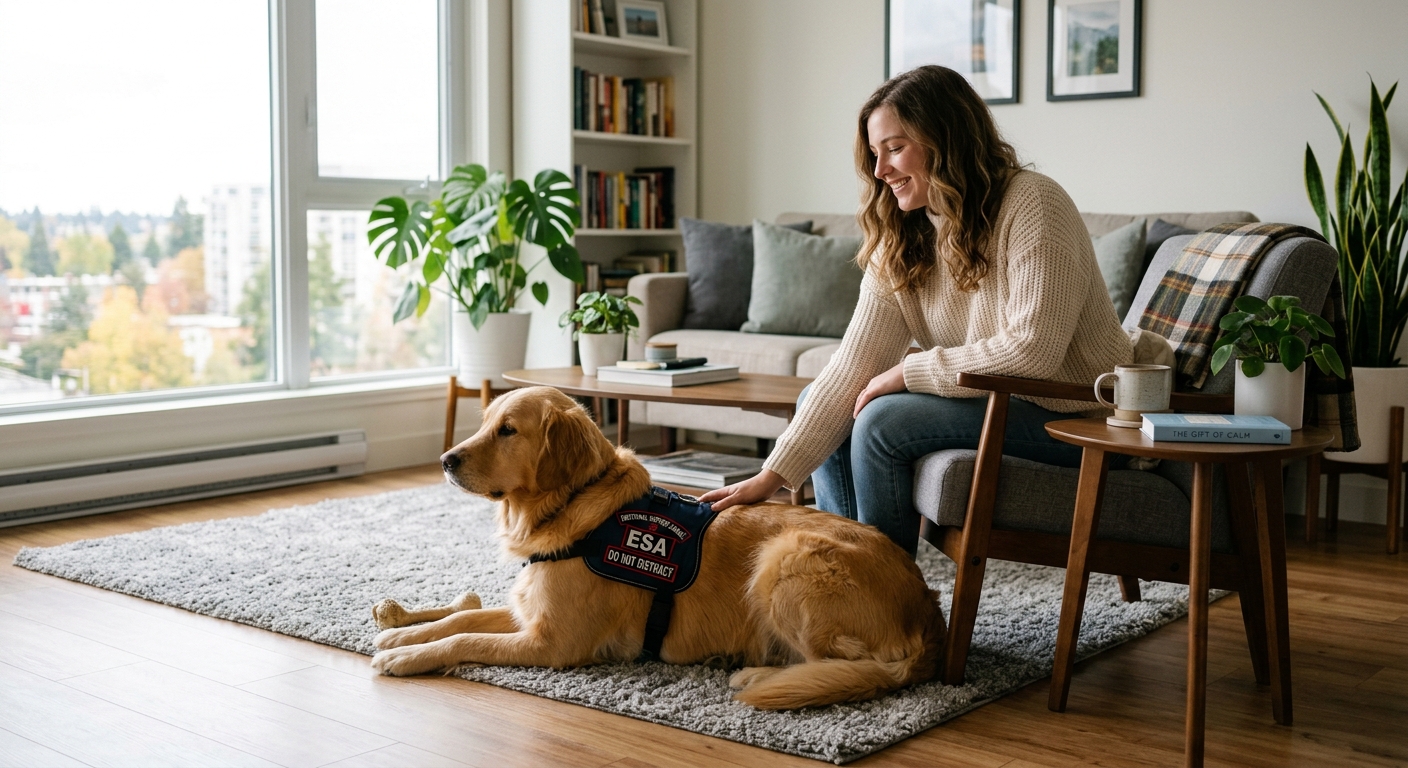
An ESA letter for postpartum depression is a clinician-signed document that may support a reasonable-accommodation request to keep an emotional support animal in housing that limits pets, when a state-licensed clinician finds a disability-related need. Postpartum depression is a medical condition; this article cannot diagnose it, and a letter is issued only after a thorough evaluation, not as a matter of course after payment. Clinical Support Animals lists that evaluation at about $149 on its qualify page as of November 16, 2026. Start at qualify. The letter does not have to name your diagnosis.
The months after a birth can already include a housing change: a smaller apartment, a new roommate situation, a move closer to family, or a building with a strict pet policy. If an animal is part of how you get through the night, leave the house, or regulate the crash of a hard day, losing that animal because of a lease clause is not a small problem. Documentation, if a clinician agrees it is appropriate, is how you make a formal request. It is not a substitute for medical care, and it is not a substitute for urgent help if you are in crisis.
If you may be in immediate danger or cannot stay safe, call 911 or your local emergency number, or call or text 988 (Suicide & Crisis Lifeline). The National Maternal Mental Health Hotline is available 24/7 at 1-833-852-6262 (call or text). Then return to housing paperwork later. If you have symptoms of postpartum depression, talk with your OB, midwife, or primary care doctor; treatment helps, and an ESA letter is not a treatment.
When housing documentation may be relevant
An ESA letter is about the home. It may be relevant when:
- You have a disability-related need, which a clinician may find in connection with postpartum depression or related perinatal mood symptoms
- The animal helps with that need in the dwelling
- The housing provider's rules would otherwise keep the animal out, or would impose pet conditions that should not apply to an assistance animal
It is not a shortcut around animal conduct rules, and it is not a public-access pass: ESAs are not service animals under the ADA, and U.S. airlines are not required to accept them in the cabin. A housing provider may deny a request if a specific animal poses a direct threat or would cause an undue burden, and some buildings may be outside federal fair housing rules. Outcomes depend on the facts and current law.
Related Clinical Support Animals pages for other housing types include ESA letter for a private landlord and ESA letter for Section 8 housing. There is also a condition-specific letter guide for bipolar disorder, which is a different diagnosis and a different article.
Ready for your ESA housing letter?
A licensed clinician reviews your free 3-minute screening.
Start Your Free ScreeningWhat a thorough evaluation looks like here
Clinical Support Animals emphasizes a thorough review by state-licensed clinicians, not a thin questionnaire that always ends the same way. On qualify, that evaluation is described at about $149 (checked November 16, 2026). You should be prepared to talk about current symptoms, how the animal helps in daily function, and your housing timeline. A prior diagnosis or a note from another clinician can be useful context; it does not automatically become a housing letter.
Privacy matters in the perinatal period. Share what the clinician needs. You do not have to put a full obstetric history into an email to a landlord. Our page on a discreet evaluation process is a useful companion, as is your private and safe online evaluation.
If what you actually need is medical treatment for postpartum depression, keep that care in motion with your existing clinicians. An ESA evaluation does not replace them.
Sending the request without oversharing
When a letter is issued, keep the housing file small:
- A short written request with your name, the unit or application, and the animal
- The clinician-signed letter, with license details a provider can verify
- No diagnosis dump, no delivery records, no therapy notes in the landlord's inbox
Housing providers may verify the license and may ask reasonable follow-up questions. There is no official ESA registry, and a vest or unofficial ID card is not a legal requirement; see why registries are not a substitute.
If you are moving between states, say so in the evaluation so licensure matches the housing that will review the letter.
Price, timing, and refunds
Confirm the current total during qualify. The public qualify page showed about $149 on November 16, 2026. Timing depends on the clinical work and on any state rules that affect when a letter may be issued. The live Terms of Service, checked November 17, 2026, describe a refund if you don't qualify. Read the current terms when you apply.
A payment does not require a clinician to issue a letter. If you do not qualify, you should not expect the document, and you should rely on the written terms then in force.
Housing changes that often collide with the postpartum period
A surprising number of ESA requests in this season are not about a brand-new pet. The animal was already in the home. What changed is the lease: a move into a smaller unit, a building that bans dogs over a certain weight, a roommate who is on the lease, or a family property being rented under new rules. The evaluation still has to be about your current need, but the paperwork should name the actual housing event so the letter and the request line up.
If a partner, parent, or friend will send emails on your behalf, decide that in advance and keep them from forwarding your medical records to the office "to be helpful." The housing file should stay small. The clinical file stays with the clinician.
Give yourself more time than a same-week move if you can. State licensure rules and the need for a real evaluation can affect timing. A last-minute request is sometimes unavoidable. It is still not a reason to buy unofficial registry papers and hope the office will not look closely.
Sleep, feeding, and a new baby already fill the day. Pick one administrative hour, write the request, save the files in one folder, and then return to care and rest. The process should be orderly. It should not become another all-night project.
Partners, family housing, and whose name is on the lease
If you are living in a unit leased by a partner or a relative, the accommodation request still has to be about the person who has the disability-related need and who lives in the home. Get the names right on the request. A well-meant email from a family member that confuses who the letter belongs to only slows the review.
If relationships in the home are themselves under strain — a common part of this season — do not use the housing request as the place to air that conflict. Keep the letter, the animal description, and the unit information together, and take relationship or safety concerns to the appropriate personal or professional support. The housing process should stay narrow so it can actually finish.
Frequently asked questions
Can I get an ESA letter for postpartum depression?
A state-licensed clinician may issue a letter if they evaluate you and find a disability-related need for the animal. Postpartum depression can be relevant. It is not an automatic result, and this page cannot diagnose you.
Will my landlord see my diagnosis or my birth records?
The letter does not have to name a diagnosis. Do not send birth records or therapy notes with a routine housing request. Providers may verify the clinician's license and may ask reasonable follow-up questions.
How much is the Clinical Support Animals evaluation?
About $149 as listed on the qualify page on November 16, 2026. Confirm the exact amount when you qualify.
What if I am already in treatment with another clinician?
Tell both sides, as appropriate, and do not treat an ESA letter as a replacement for medical care. A housing letter and perinatal treatment have different jobs.
Is this urgent-care or crisis care?
No. If you cannot stay safe, call 911 or call or text 988 first; the National Maternal Mental Health Hotline is 1-833-852-6262. For postpartum symptoms, see your doctor or midwife. Housing documentation can wait.
How do I start?
Go to qualify. Choose a private time, and describe how the animal helps in daily life, not only the name of a condition.
Request a thorough evaluation with Clinical Support Animals
If an emotional support animal is part of how you are getting through the postpartum period, and a housing rule is in the way, a careful clinical evaluation is the next step — not a registry card. Clinical Support Animals provides that thorough review. Begin at qualify when you are ready.